
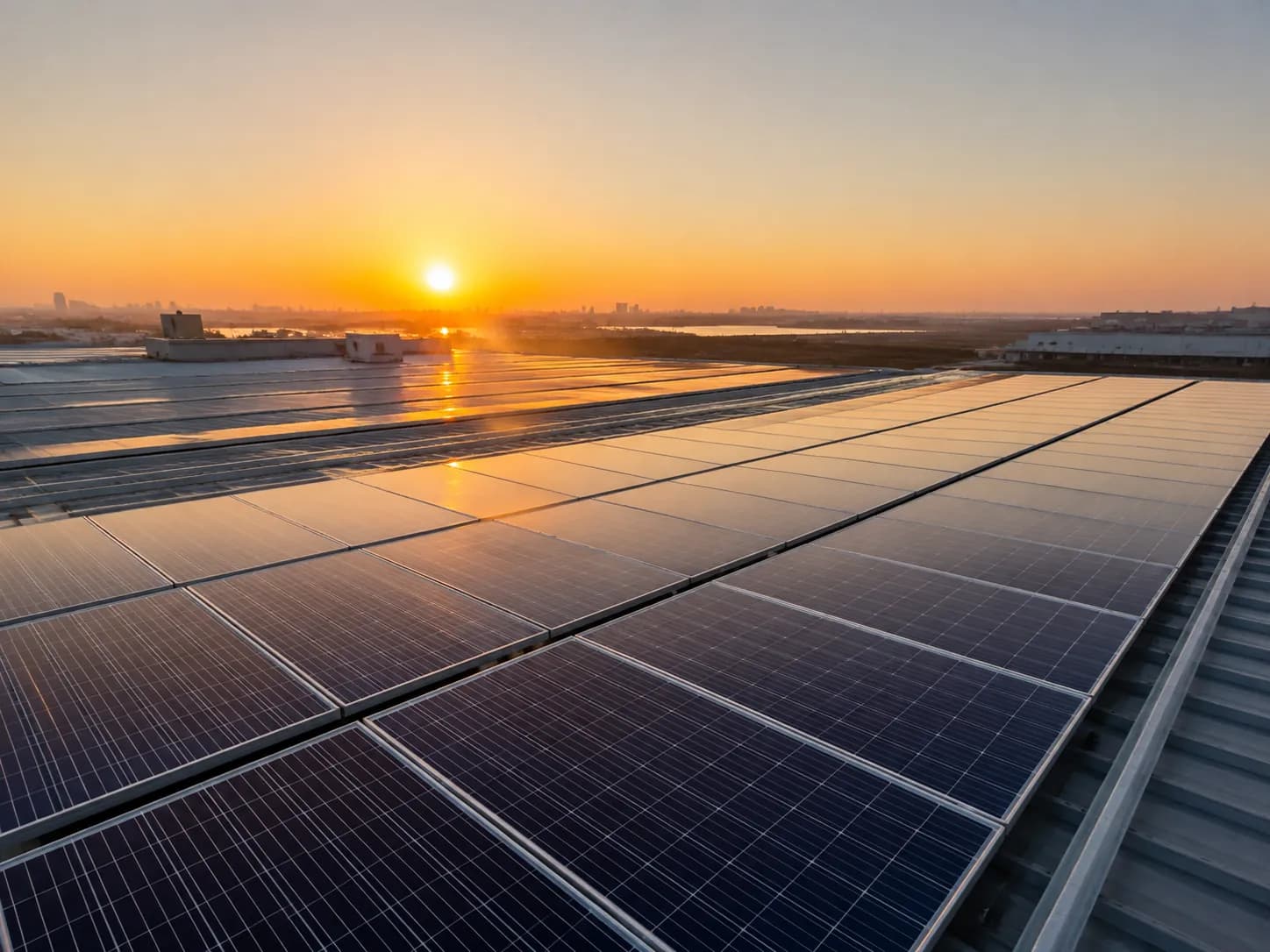
An on-grid solar system works alongside the utility supply. Solar generation serves the building first; any shortfall is drawn from the grid and surplus handling depends on the applicable connection and metering arrangement. It is usually the simplest route to reducing daytime electricity purchases, but it is not a backup system by default.
How electricity moves through the system
During daylight, the inverter converts DC power from the modules into AC power for the building. Solar energy is consumed at the site before additional electricity is imported from the grid. If generation exceeds the instantaneous load, surplus treatment depends on the approved metering arrangement. Because a grid-tied inverter must not energise a disconnected utility line, it normally stops during a power cut even when the sun is shining.
- Solar first serves active loads
- The grid covers any shortfall
- Export is subject to the sanctioned connection arrangement
- Outage backup requires a compatible hybrid or storage design
Where on-grid solar is a strong fit
A good candidate has predictable daytime consumption, a usable roof or open area and a reasonably reliable grid connection. Homes can benefit when appliances, pumps or cooling run during daylight. Commercial and industrial sites often have an even closer match because operations coincide with solar hours. Sites dominated by night-time use may still benefit, but the export policy and tariff structure become more important to the business case.
Size from evidence, not a single formula
Start with at least 12 months of electricity bills and, for larger sites, interval or load data when available. Separate energy charges from fixed, demand and statutory charges because solar does not reduce every line item equally. The final capacity must also respect sanctioned load, transformer and interconnection limits, export rules, seasonal consumption and the usable roof area. A responsible proposal should state all assumptions rather than promise one universal output figure.
Check the site before fixing capacity
A physical survey should assess shade, orientation, roof condition, structural capacity, drainage, waterproofing, fire and maintenance access, cable routes and the location of electrical panels. Commercial roofs may also contain vents, skylights and operating equipment that need safe clearance. The highest theoretical capacity is not always the best layout if it compromises access, safety or future roof maintenance.
Look beyond module wattage
The modules and inverter matter, but so do the mounting structure, compatible connectors, DC and AC protection, earthing, lightning protection where required, cable management, labelling and monitoring. Ask for a single-line diagram, layout, equipment data sheets, testing records and warranty documents. Clear responsibility for workmanship and after-sales response is as important as the product brand.
Compare proposals on the same basis
Check whether each quote includes design, structure, civil work, approvals support, meters, taxes, monitoring, commissioning and post-installation service. Review estimated generation alongside the irradiation source, loss assumptions and degradation treatment. Savings projections should be treated as indicative scenarios because weather, consumption, tariffs, curtailment, downtime and maintenance can all change the result.
Practical checklist
- Keep 12 months of electricity bills and sanctioned-load details ready.
- Ask for a shade, structure, roof and electrical assessment.
- Confirm the current utility process and surplus-energy treatment for the site.
- Compare complete equipment, protection, monitoring and documentation scope.
- Request an assumption-led generation and savings model, not a guaranteed return.
Frequently asked questions
Will on-grid solar run during a power cut?
Not in a standard grid-tied configuration. Anti-islanding protection stops the inverter when the grid is unavailable. Backup needs a deliberately designed hybrid inverter, battery and critical-load arrangement.
Can the system eliminate my entire electricity bill?
Usually not every component. Fixed charges, demand charges, minimum charges and other items may remain, and energy savings depend on actual generation, consumption timing and the applicable metering rules.
What determines the right system size?
Consumption history, load timing, usable unshaded area, electrical limits, sanctioned load, current utility rules and the customer's financial objective all contribute to the final recommendation.
This guide provides general information, not a site-specific technical, financial or legal recommendation. Site conditions, tariffs, regulations, incentives, product terms and lender policies can change. Verify current requirements and obtain a project-specific assessment before deciding.