
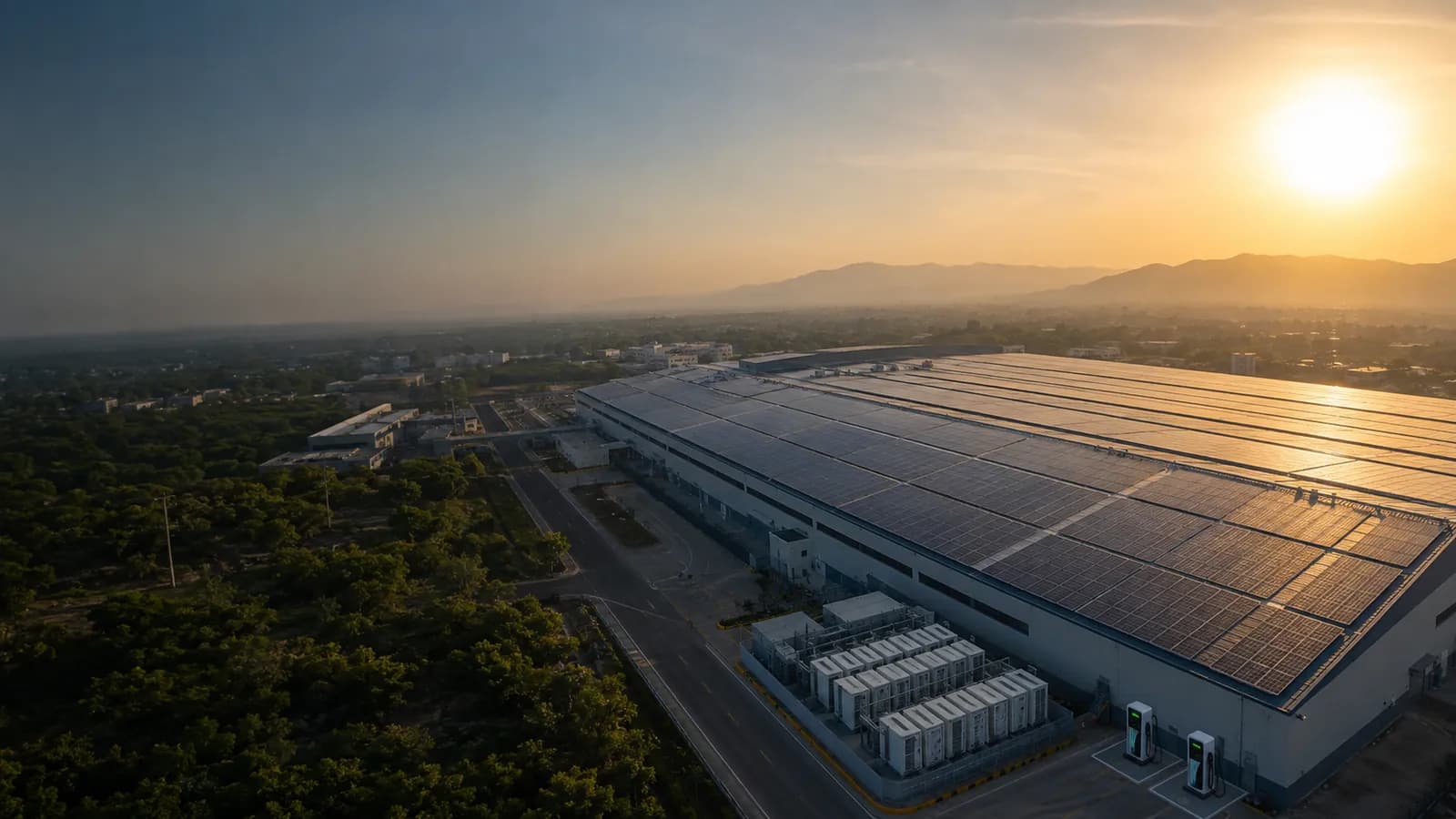
Solar plants operate outdoors for years, so long-term performance depends on far more than module wattage or a familiar brand name. Equipment selection, structure, electrical protections, connector compatibility, workmanship, testing and service all interact. A quality review should examine the complete installed system and the evidence handed over with it.
Begin with a site-specific design
Quality starts before procurement. The layout should respond to shade, wind exposure, roof condition, drainage, access, electrical limits and the owner's operating needs. Equipment ratings must suit the environment and system voltage. A generic bill of materials copied between sites can miss structural, corrosion, temperature or interconnection requirements.
Review module and inverter evidence
Ask for exact make, model, data sheets, relevant certification, serial-number traceability and warranty documents. Confirm electrical compatibility between strings and the inverter across expected temperatures. For hybrid systems, verify battery and inverter compatibility through documented manufacturer support. Brand recognition does not replace model-level engineering or a clear local claim process.
Do not overlook balance-of-system components
Cables, connectors, isolators, protective devices, junction boxes, earthing and surge protection influence safety and uptime. Mixed or poorly assembled connectors can create weak points. Confirm component ratings, enclosure suitability, cable sizing and protection coordination. Labels and accessible isolation help both emergency response and future maintenance.
Match the structure to the building
The mounting system should address design loads, roof material, corrosion exposure, drainage and maintenance access. Penetrations need an agreed waterproofing method and responsibility. On commercial roofs, preserve fire paths, skylight access and operational equipment clearances. Structural adequacy should be established by an appropriately qualified professional where required.
Inspect workmanship and commissioning
Look for supported cable routes, correct bend radii, secure terminations, consistent fasteners, protected roof interfaces, clear labels and tidy electrical rooms. Commissioning should include the tests appropriate to the design, recorded results, monitoring setup and an owner walkthrough. Photographs and as-built drawings create a useful baseline for later service.
Understand warranties and after-sales roles
Module, inverter, battery, structure and workmanship cover different risks and may have different conditions. Read exclusions, registration requirements, operating limits and the evidence needed for a claim. Identify whether the installer, manufacturer or another party will diagnose faults, remove equipment, arrange logistics and restore the system. Warranty availability does not eliminate preventive maintenance.
Practical checklist
- Approve an exact equipment schedule, not an open-ended equivalent.
- Check certifications, compatibility, serial traceability and warranty documents.
- Review structure, waterproofing, protection, earthing and cable workmanship.
- Require testing records, as-built drawings, labels and monitoring access.
- Confirm who owns fault response and warranty coordination after handover.
Frequently asked questions
Is choosing a well-known module brand enough?
No. The exact model, design, inverter, structure, protection, installation and service process all affect plant quality. A strong component cannot compensate for weak engineering or workmanship.
What should be included at handover?
Typically the approved design, as-built drawings, equipment data, serial records, test and commissioning results, monitoring access, warranties, operating guidance and service contacts.
Does a long warranty guarantee energy production?
No. Product and performance warranties have defined terms and exclusions. Actual generation also depends on weather, design, shade, soiling, uptime, degradation and maintenance.
This guide provides general information, not a site-specific technical, financial or legal recommendation. Site conditions, tariffs, regulations, incentives, product terms and lender policies can change. Verify current requirements and obtain a project-specific assessment before deciding.