
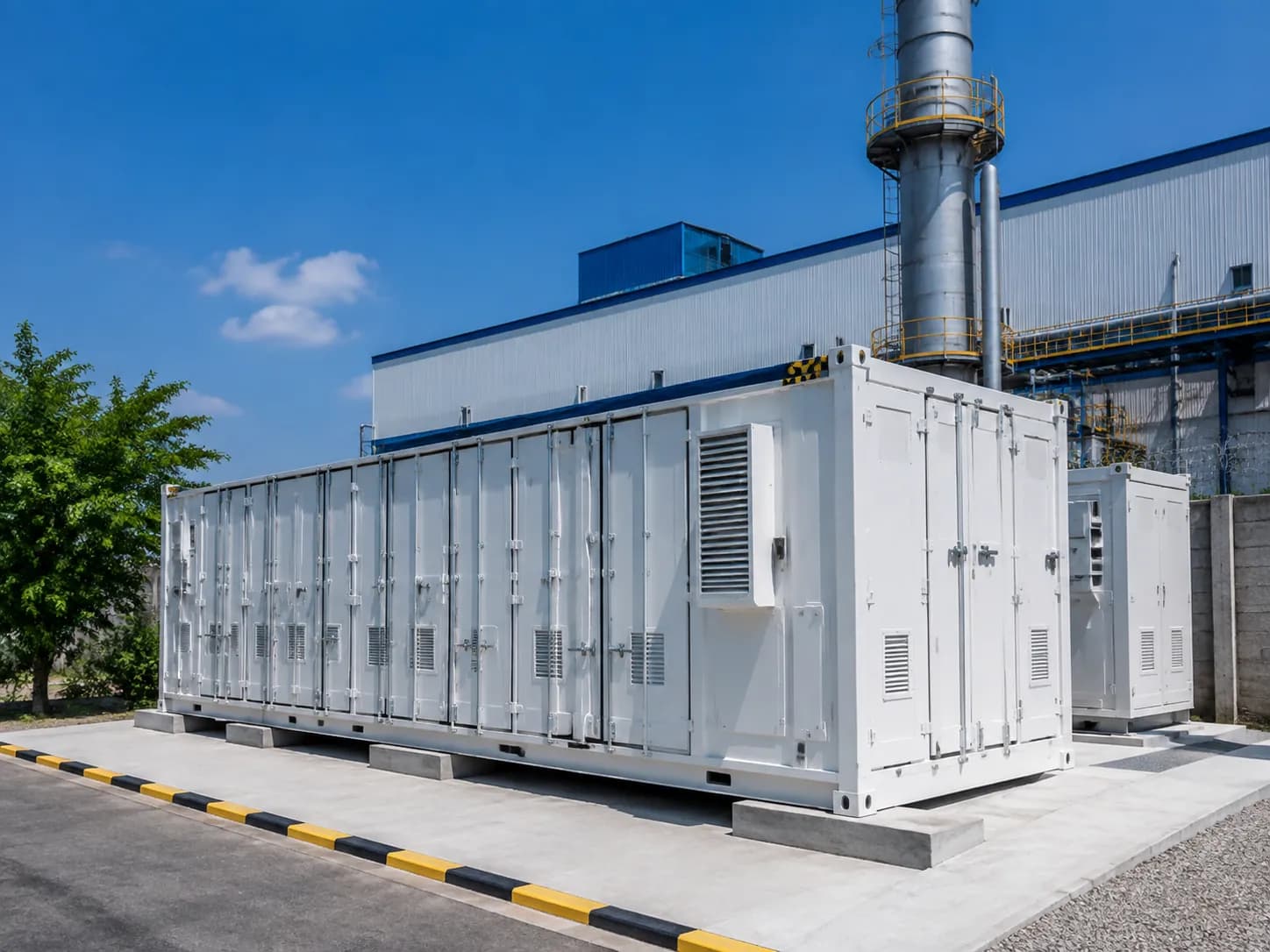
A battery energy storage system can support resilience, demand management, solar self-consumption or other site objectives. It creates value only when the intended use is supported by real load data and a coordinated electrical, controls and safety design. The nameplate kWh figure alone is not a specification.
Start with a measurable use case
For backup, define critical loads and outage duration. For peak management, identify how often peaks occur, their duration and the tariff mechanism. For solar self-consumption, measure the timing and volume of surplus generation. For power-quality or operational support, document the disturbance and required response. If services are stacked, establish priority rules and avoid assigning the same stored energy to two benefits at once.
Build the site data set
Use interval load data where available, not only monthly bills. Add outage history, generator logs, production schedules, planned expansion, existing solar profiles, tariff rules and critical-process constraints. Identify motors or equipment with high starting current. Data quality determines whether the simulation represents real operations or an attractive but fragile average day.
Specify power, energy and operating limits
Power in kW governs instantaneous charge and discharge capability. Usable energy in kWh governs how long the battery can deliver that power. Account for depth-of-discharge limits, conversion efficiency, reserve, temperature and degradation. The design should show performance at the beginning and later in the project life, not only the new-battery nameplate figure.
Integrate controls with the facility
The energy-management system coordinates the battery with loads, solar, grid supply and generators. Confirm meter locations, control response, communications, cybersecurity responsibilities, alarm handling and what happens if data connectivity is lost. For resilience, document islanding, transfer, black-start or generator-start behaviour as applicable and test it during commissioning.
Engineer safety around the selected system
Review cell and enclosure certifications, battery-management functions, electrical isolation, earthing, ventilation or cooling, fire detection and response, spacing, access control and emergency shutdown. Requirements depend on technology, capacity and location. Engage qualified electrical, fire, structural and statutory stakeholders early rather than treating approval as a final paperwork step.
Model lifecycle economics
Include efficiency losses, auxiliary consumption, capacity fade, cycle limits, maintenance, software or connectivity costs, insurance, downtime and augmentation or replacement assumptions. Test the model against lower spreads, fewer peaks, changed operations and degraded capacity. Any savings or return figure is indicative unless governed by a separate, clearly defined contractual commitment.
Practical checklist
- Define the primary use case, success metric and dispatch priority.
- Gather interval load, outage, generator, solar and tariff data.
- Specify usable kWh, kW, reserve, efficiency and end-of-life capacity.
- Complete electrical, controls, site and safety studies.
- Compare lifecycle cost, warranty limits, monitoring and service response.
Frequently asked questions
Can one BESS provide backup and reduce peak demand?
Potentially, but those services compete for stored energy. The controls and financial model must reserve enough capacity for the higher-priority objective and avoid double-counting benefits.
Why is interval data important?
Monthly totals do not show the height, duration or timing of peaks. Interval data reveals whether a battery can realistically address the target event and how often it may cycle.
What should a warranty comparison include?
Review covered years, throughput or cycles, retained capacity, operating-temperature and usage limits, exclusions, service process and who is responsible for diagnosis and claim coordination.
This guide provides general information, not a site-specific technical, financial or legal recommendation. Site conditions, tariffs, regulations, incentives, product terms and lender policies can change. Verify current requirements and obtain a project-specific assessment before deciding.